

There are over 15,000 cryptocurrencies in existence.
For all the attention paid to Bitcoin, there are over 15,000 others, each with a whitepaper, a Discord server, a Telegram group full of believers, and a founding team promising to revolutionize something. Most of these will go to zero (many already have). Some are outright scams. Others are zombie chains; technically alive, practically dead, trading on obscure exchanges with daily volumes that wouldn't cover a decent dinner.
And yet, in the middle of this digital graveyard, a handful of projects continue to attract serious capital, serious developers, and serious debate.
Bitcoin remains king — by market cap, by brand recognition, by institutional adoption. But is it structurally superior? Or is it simply first?
I decided to ask the machines.
The Experiment: A Simple Prompt, Four AI Models
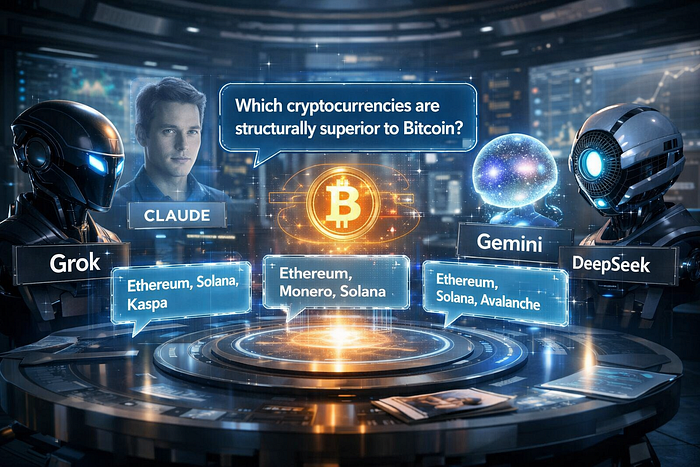
I posed the same analytical prompt to four leading AI models — Grok, Claude, Gemini, and DeepSeek — and asked each to identify up to three cryptocurrencies that could be considered "structurally superior" to Bitcoin over the next decade.
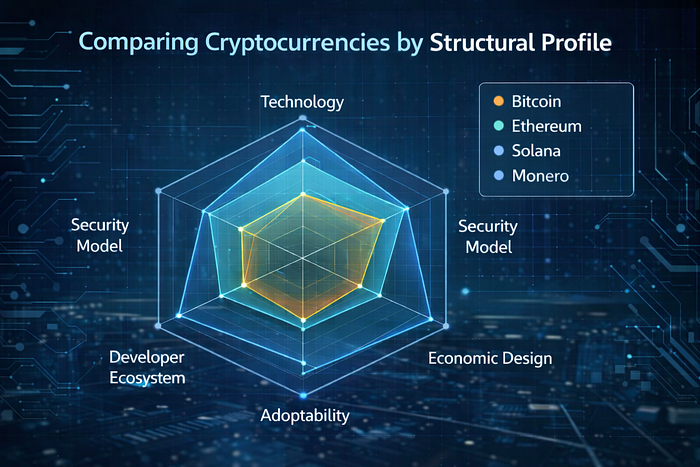
The rules were strict:
- Define "structurally superior" across six dimensions: Technology, Security Model, Scalability, Developer Ecosystem, Economic Design, and Real-World Adoption Potential
- For each crypto: explain how it's superior, where it's inferior, and the single biggest risk that could prevent it from overtaking Bitcoin
- No defaulting to market cap or popularity
- Be analytical, not promotional
I wanted cold analysis, not the latest X feed fanatical nonsense.
Here's what came back.
The Surprising Results
I expected to find consistency among the four models but was struck by the interesting divergence.
- Grok: Ethereum, Solana, Kaspa
- Claude: Ethereum, Monero, Solana
- Gemini: Ethereum, Monero, Solana
- DeepSeek: Ethereum, Solana, Avalanche
Of course, two things jumped out immediately: Ethereum was listed first in each case and Solana was also included unanimously.
But the third picks were interesting and unexpected. Monero was added by two AIs, which I've only mentioned once in a prior article. And then there were two others, Kaspa and Avalanche, that are less familiar.
Interestingly, when asked to think structurally, the AI models ignored some of the most popular crypto names in the space.
Notably absent: XRP, Cardano, Dogecoin, Tron or Chainlink.
The Unanimous Picks: Why Every AI Chose Ethereum and Solana
Ethereum: The Programmable Foundation
Every single model identified Ethereum as structurally superior to Bitcoin in its role as a utility-driven platform. The arguments were consistent:
Technology: Ethereum introduced smart contracts and the EVM. Bitcoin transfers value. Ethereum executes logic. It's a different category of system — programmable money versus digital gold.
Scalability: Bitcoin's base layer caps out at roughly 7 transactions per second. Ethereum's Layer-2 ecosystem — Arbitrum, Optimism, Base, zkSync — already delivers thousands of TPS collectively with low costs. Future upgrades (danksharding) will push this further.
Developer Ecosystem: Ethereum hosts the overwhelming majority of blockchain developers. The most audited code. The highest total value locked in DeFi (~$50B+). This creates a self-reinforcing flywheel that Bitcoin simply doesn't have.
Economic Design: EIP-1559 introduced fee burning, making ETH deflationary during high activity. Staking yields provide real utility. Bitcoin offers pure scarcity — but scarcity alone doesn't generate yield.
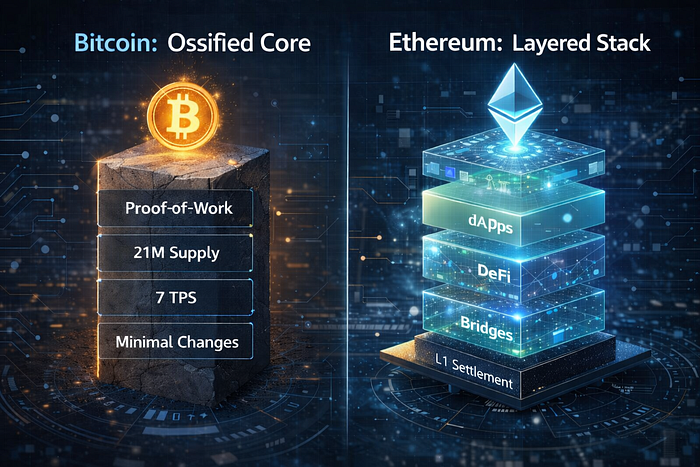
But here's the catch. Every model also flagged the same risk. Layer-2 fragmentation could fracture the ecosystem. If activity migrates to L2s that capture their own value, Ethereum's base layer could become a settlement backbone rather than an economic engine. The "ultrasound money" thesis depends on sustained L1 fee pressure which L2 scaling actively reduces.
Ethereum's biggest strength (scalability via L2s) could become its biggest vulnerability.
Solana: The Performance Monster
Solana's unanimous selection was more surprising especially given its turbulent history with network outages and the FTX association. But the models looked past the narrative and focused on architecture.
Scalability: Real-world throughput of 2,000–5,000 TPS with sub-second finality and fees under $0.01. Bitcoin's 10-minute block time isn't just slow, it's structurally non-viable for consumer applications.
Technology: Proof of History combined with parallel execution (Sealevel) allows Solana to process transactions simultaneously rather than sequentially. This is how modern supercomputers work.
Adoption Potential: Low fees and high-speed position Solana for mass-market use cases; payments, gaming, micro-transactions and, DePIN. Areas where Bitcoin is a non-starter.
Real Risks: Hardware requirements for validators are high, concentrating participation. The network has experienced multiple outages, a disqualifying flaw for "digital gold" ambitions. Client diversity remains a concern. And Solana's monetary policy lacks the clean simplicity of Bitcoin's 21 million cap.
Claude put it bluntly: "Solana's design prioritizes speed and throughput, which has led to trade-offs in decentralization and reliability."
Still, four out of four AIs selected it.
The Divergent Picks: Where the Machines Disagreed
Monero (Selected by Claude and Gemini)
Two models chose the privacy coin that exchanges keep delisting.
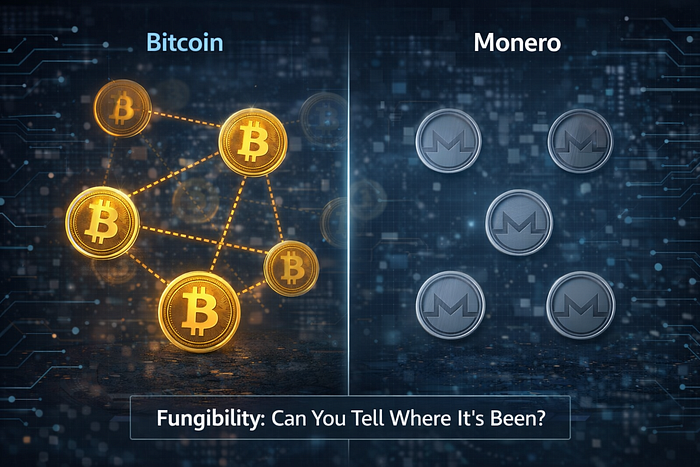
Monero implements privacy by default with Ring Signatures, Stealth Addresses, and Bulletproofs that make every transaction private at the base layer. Bitcoin's pseudonymity, by contrast, is increasingly a liability as chain analysis tools become more sophisticated.
The bull case: Monero is structurally more fungible than Bitcoin. Every coin is indistinguishable from every other coin. It also has a "tail emission" which is a permanent small block reward that solves Bitcoin's long-term security budget problem.
The bear case: Regulatory extinction risk. Monero could be delisted from every major exchange globally and banned from institutional on/off ramps. This wouldn't kill the protocol, but it would prevent mainstream adoption.
Claude didn't mince words: "The same privacy that makes it technically superior makes it a target structurally."
Gemini agreed: "If Monero is completely banned from regulated fiat on-ramps, it may be relegated to a niche 'black market' currency."
Kaspa (Selected by Grok)
This was an unexpected wildcard.
Kaspa uses a BlockDAG architecture that allows parallel block creation rather than the sequential chain that limits Bitcoin. The result? Near-instant confirmations (~1 second) while retaining Proof-of-Work principles.
The bull case: Kaspa positions itself as "digital silver" to Bitcoin's gold ; fast, cheap, decentralized payments without sacrificing PoW security. It had a fair launch with no pre-mine or VC allocation, and a hard-capped supply of ~28.7 billion.
The bear case: Hash rate is orders of magnitude lower than Bitcoin's, making 51% attacks far cheaper. The developer ecosystem is nascent. And it lacks the institutional infrastructure that Bitcoin has spent 17 years building.
Grok's assessment: "Success depends on execution, not hype."
Avalanche (Selected by DeepSeek)
DeepSeek went the enterprise route with Avalanche.
Avalanche's Subnet architecture allows anyone to create custom, application-specific blockchains that interoperate with the broader ecosystem. This is compelling for real-world asset tokenization and institutional adoption.
The bull case: Institutions need compliance control. Subnets let them tokenize assets while maintaining regulatory requirements. This positions Avalanche as a bridge for trillions in traditional assets to migrate on-chain.
The bear case: The developer ecosystem is smaller and less mature than Ethereum's. Subnet adoption may remain niche, failing to generate enough economic activity to secure the primary network.
What Does This Mean for Bitcoin?
For now, Bitcoin remains the standards by which all of the other 15,000+ cryptocurrencies are measured.
Bitcoin's perceived weaknesses are largely features, not bugs. Its lack of programmability reduces attack surface. Its fixed supply policy is politically durable because it's boring and unchangeable. Its mining-based security is energy-intensive but battle-tested over 17 years.
Claude's closing thought stuck with me: "Any successor would need to replicate not just Bitcoin's technical properties but its social credibility as a neutral, unchangeable monetary base — and that's not something you can ship in a roadmap."
The machines can identify structural superiority but not inevitability. Inclusion on their list of BTC alternatives, does not mean market acceptance.
Sometimes markets reward the shiniest coin and not the most practical.
Author's Note: If you are wondering why no Stable Coins were listed, I asked that too. All four agreed. Here is what Claude explained:
"Stablecoins weren't included because the question asked for cryptocurrencies that could be "structurally superior to Bitcoin" — and stablecoins are competing in a fundamentally different category.
Thanks for reading. Want more about Bitcoin?
- Bitcoin's Three Futures — And Why None Look Like the Dream
- The Bitcoin Dream Just Collided with Math
- Bitcoin: The 1.8 Trillion-Dollar Glass Cannon
- Why Bitcoin Can Fall Even While Institutions Are Buying
- What Happens When Bitcoin Hodlers Can No Longer Pay Its $14 Billion Electric Bill?
Follow me on Substack or online at evervests.com.
Images Source: Except as directly noted, all images were created by EverVests.com via AI
Disclaimer: This content is for informational and educational purposes only and should not be considered financial, investment, or trading advice. The views expressed are based on publicly available information and personal opinion at the time of writing. Markets and conditions may change. Always perform your own research, verify data independently, and consult with a licensed financial advisor or investment professional before making investment decisions. The author may hold positions in the securities or assets discussed.